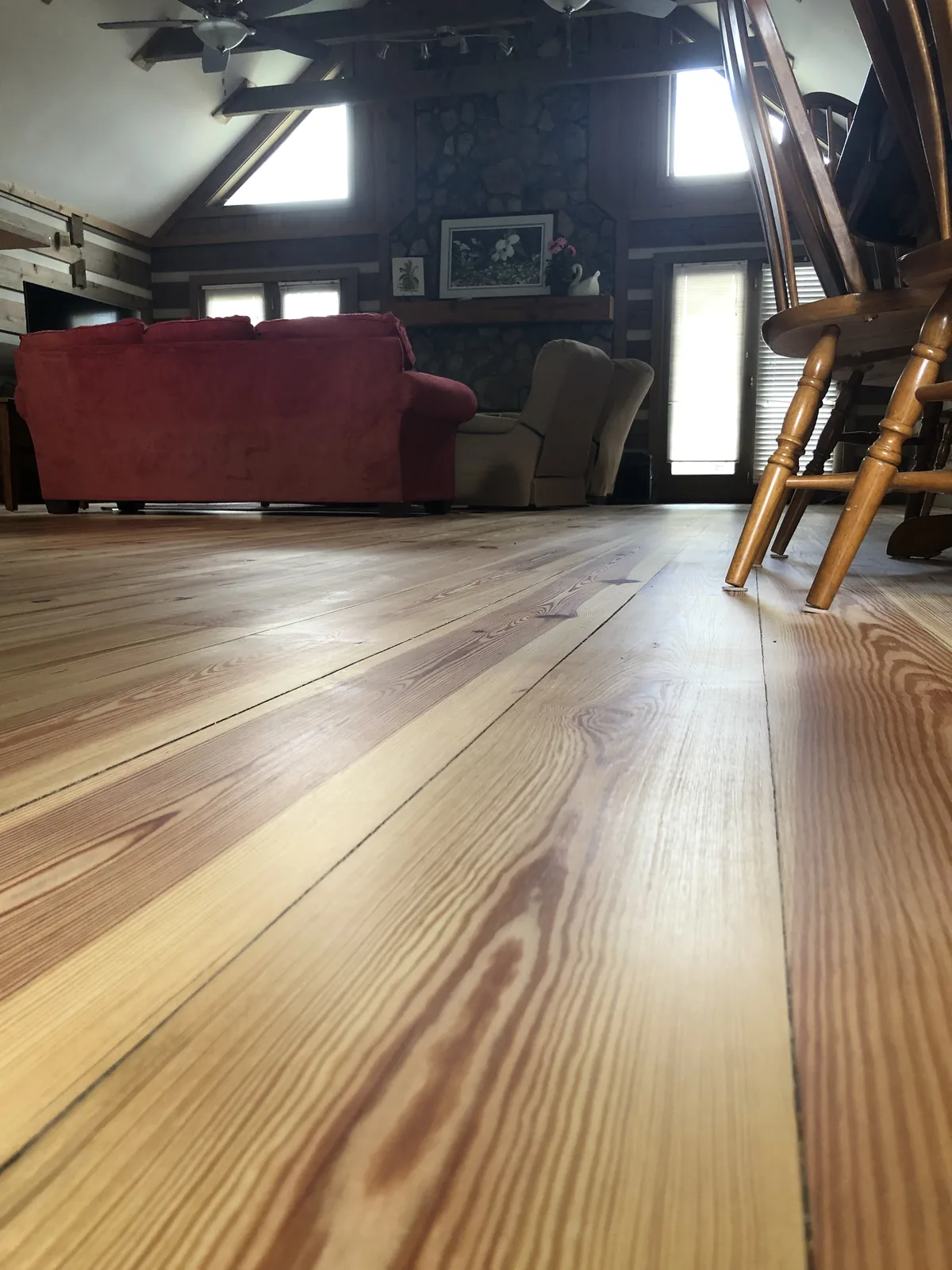
Reclaimed Installation
We source, mill and lay salvaged antique heart pine — wide-plank, tongue-and-groove, face- or blind-nailed — over a subfloor we prep to stay flat for the next hundred years.
Home/Heart Pine
The specialty
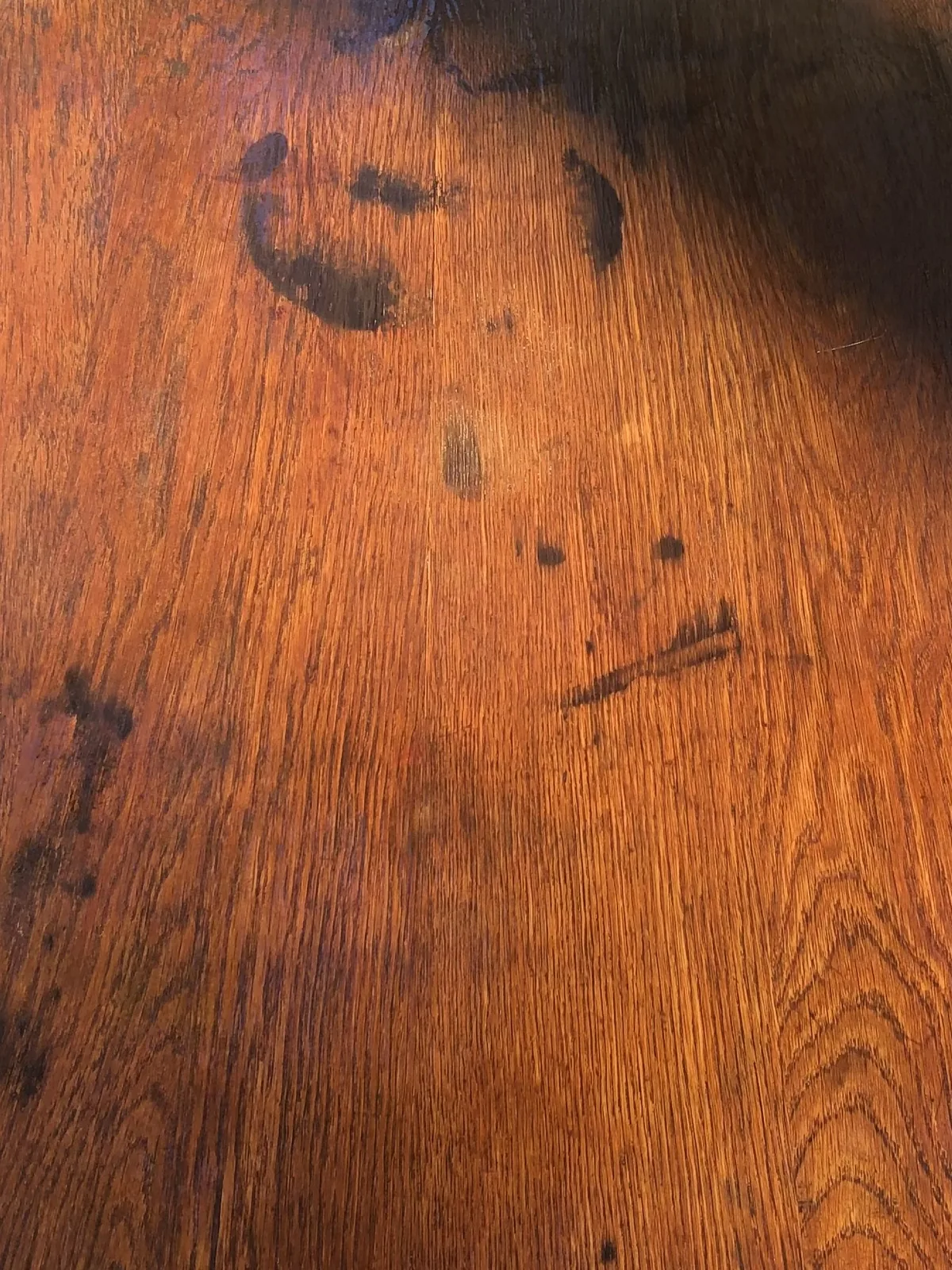
Reclaimed installation, in-place restoration, and museum-careful refinishing of the most beautiful — and most demanding — floor in America.
What it is
Antique heart pine is cut from the dense red heartwood of old-growth longleaf pine — trees that stood in southern forests for two, three, even four hundred years before they were felled a century or more ago. The virgin forests are gone. Every board in a heart pine floor is reclaimed history, and there will never be more of it.
Why it’s different
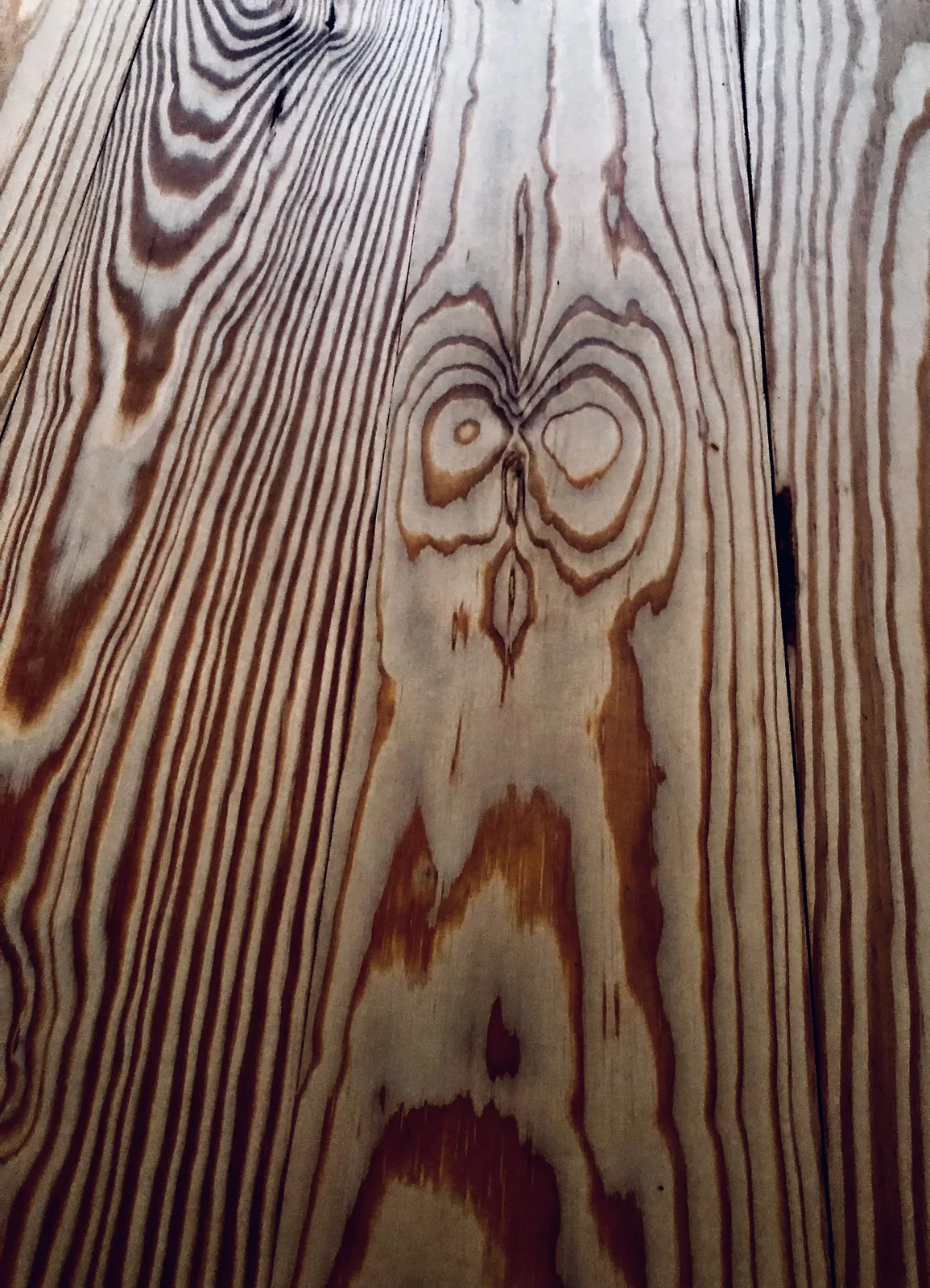
Because it grew so slowly, old-growth heart pine packs dozens of growth rings into an inch — where modern pine has a handful. That density is why it glows amber and red, why it rings hard underfoot, and why it has carried the floors of farmhouses, mills and churches for a hundred and fifty years without giving out.
It is also why it is so unforgiving. Soft on top and iron-hard beneath, heart pine burns if you sand it hot, blotches if you flood it with stain, and shows every shortcut. Getting the depth without losing the grain is a feel you earn over decades — not a technique you look up.
How we work heart pine
We source, mill and lay salvaged antique heart pine — wide-plank, tongue-and-groove, face- or blind-nailed — over a subfloor we prep to stay flat for the next hundred years.
For original floors worth saving, we cut out broken and missing boards and weave in feathered replacements and dutchman patches from matched reclaimed stock — seams you’ll never find.
Careful multi-grit sanding, hand-troweled fill, and a finish tuned to the wood — reviving the amber depth without scorching the surface or muddying the grain.
What to look for
Good questions
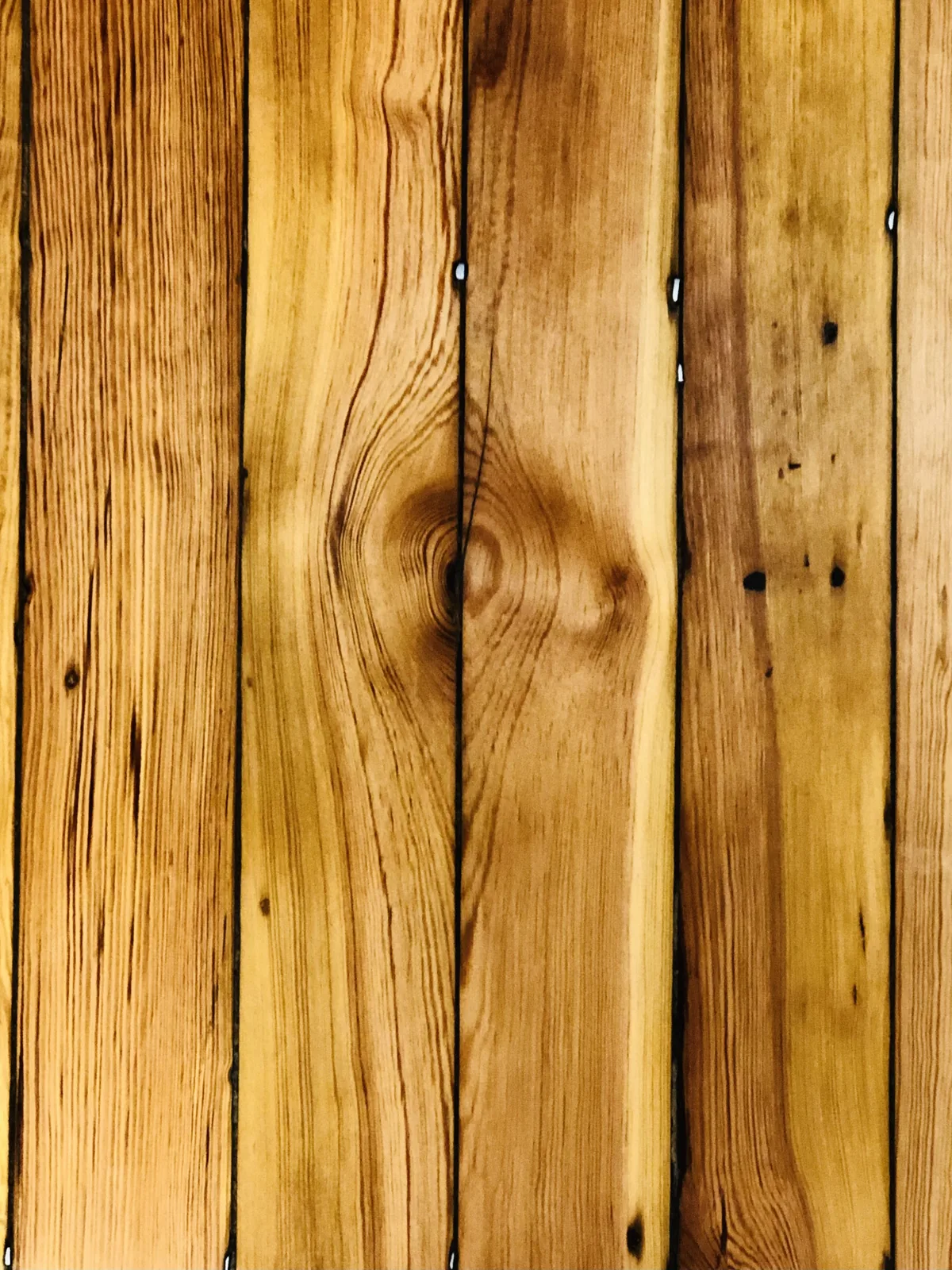
It’s flooring milled from the dense heartwood of old-growth longleaf pine — trees that often grew 200–400 years before being cut a century or more ago. Reclaimed from old buildings and timbers, it’s far denser, redder and tighter-grained than any pine milled today.
Almost always. Solid heart pine can be sanded and refinished many times across its life. The trick is a light, patient hand — it’s soft on the surface and burns or blotches easily if handled like oak. It’s the definition of a floor that rewards experience.
We keep and source reclaimed antique heart pine and cut feathered replacements and dutchman patches, matched for width, grain and tone and woven into the existing field so the repair disappears.
Both are beautiful. Hardwax oil (like Rubio Monocoat) gives a natural, low-sheen, spot-repairable finish; polyurethane builds a harder, glossier film. We lay samples on your actual floor so you choose in your own light.
Have a heart pine floor?
Whether it’s hidden under carpet or crying out for a refinish, we’ll tell you honestly what it needs.